We have used K&R Group Ltd for our boarding, skimming and screeding. Highly recommend their professional services.


K&R Facades Gallery





×
❮
![Lightbox Image]() ❯
❯
Facades
Chippenham & West Wiltshire
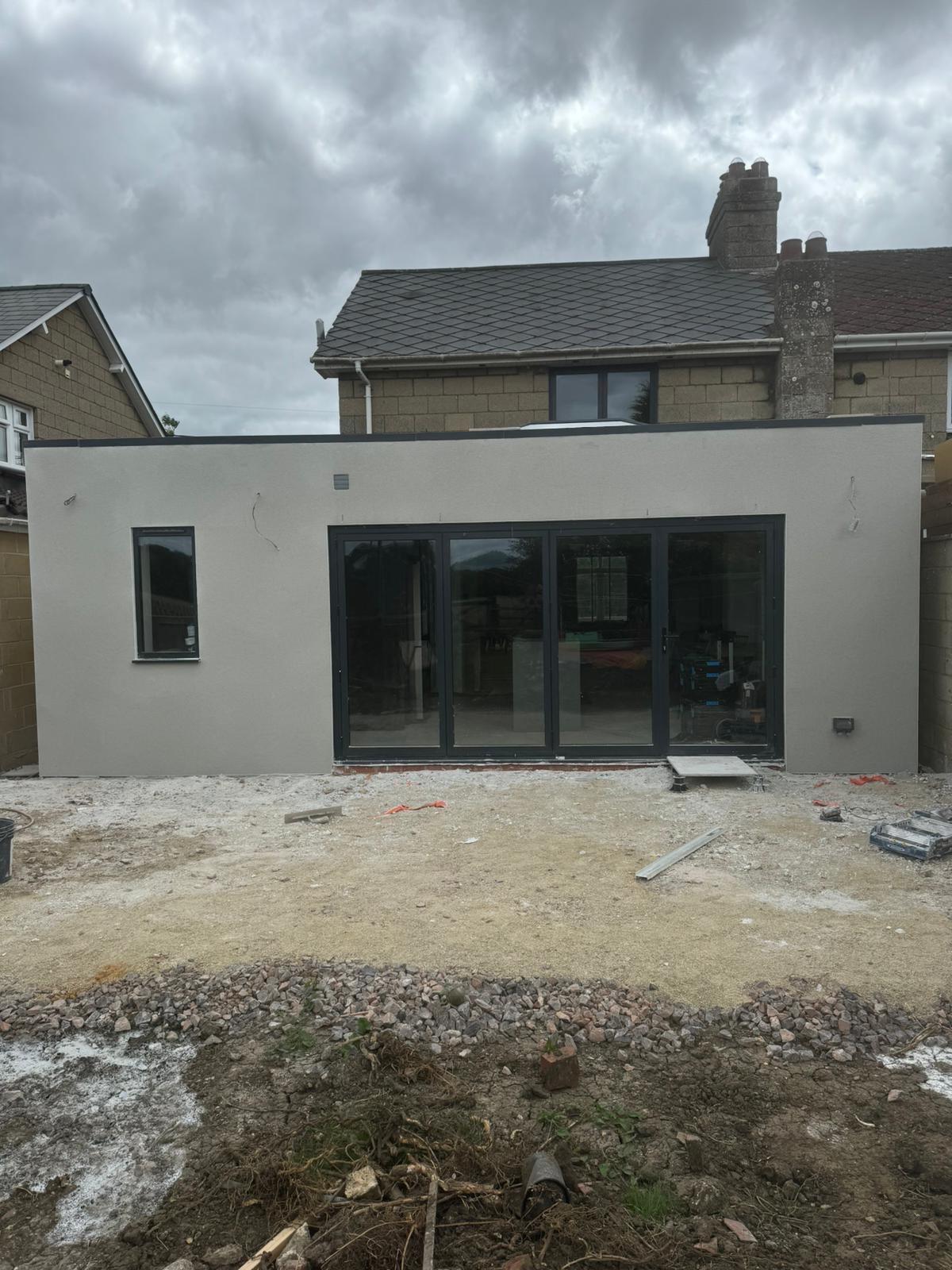
We offer solutions with a wide range of manufacturers, finishes and through coloured renders.
Rendering:
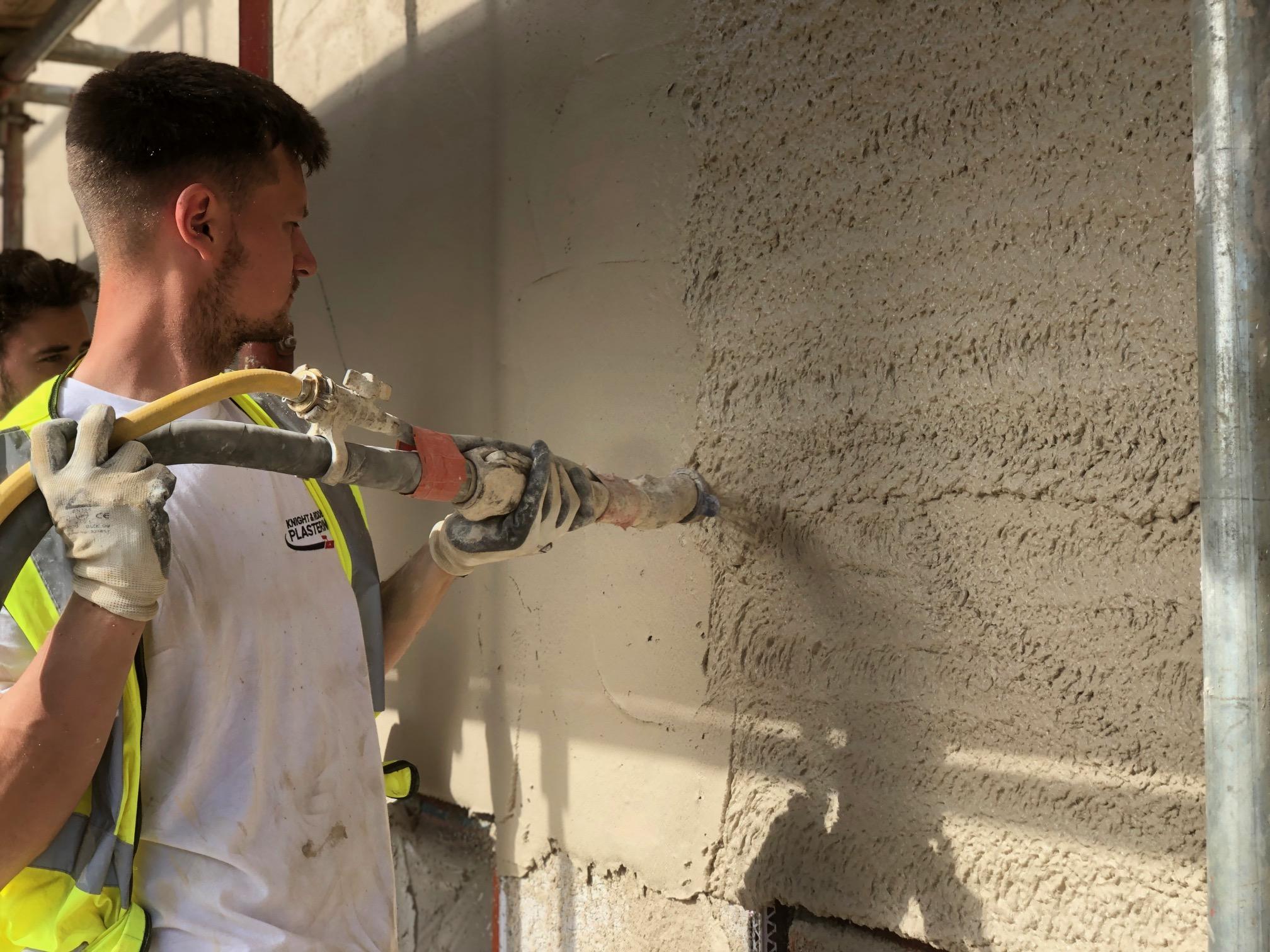
From sand and cement to through colour render with a pebble dash, roughcast or smooth finish. All projects can be completed by hand or machine to a wide range of backgrounds.
Morden through coloured renders are designed to go direct onto new blockwork. This is a very efficient way of achieving the desired effect while offering excellent thermal properties. This can be applied smooth, scrapped or in a roughcast finish. Sometimes there is a need for a basecoat on older substrates but we can generally work with any surface.
Lime Renders
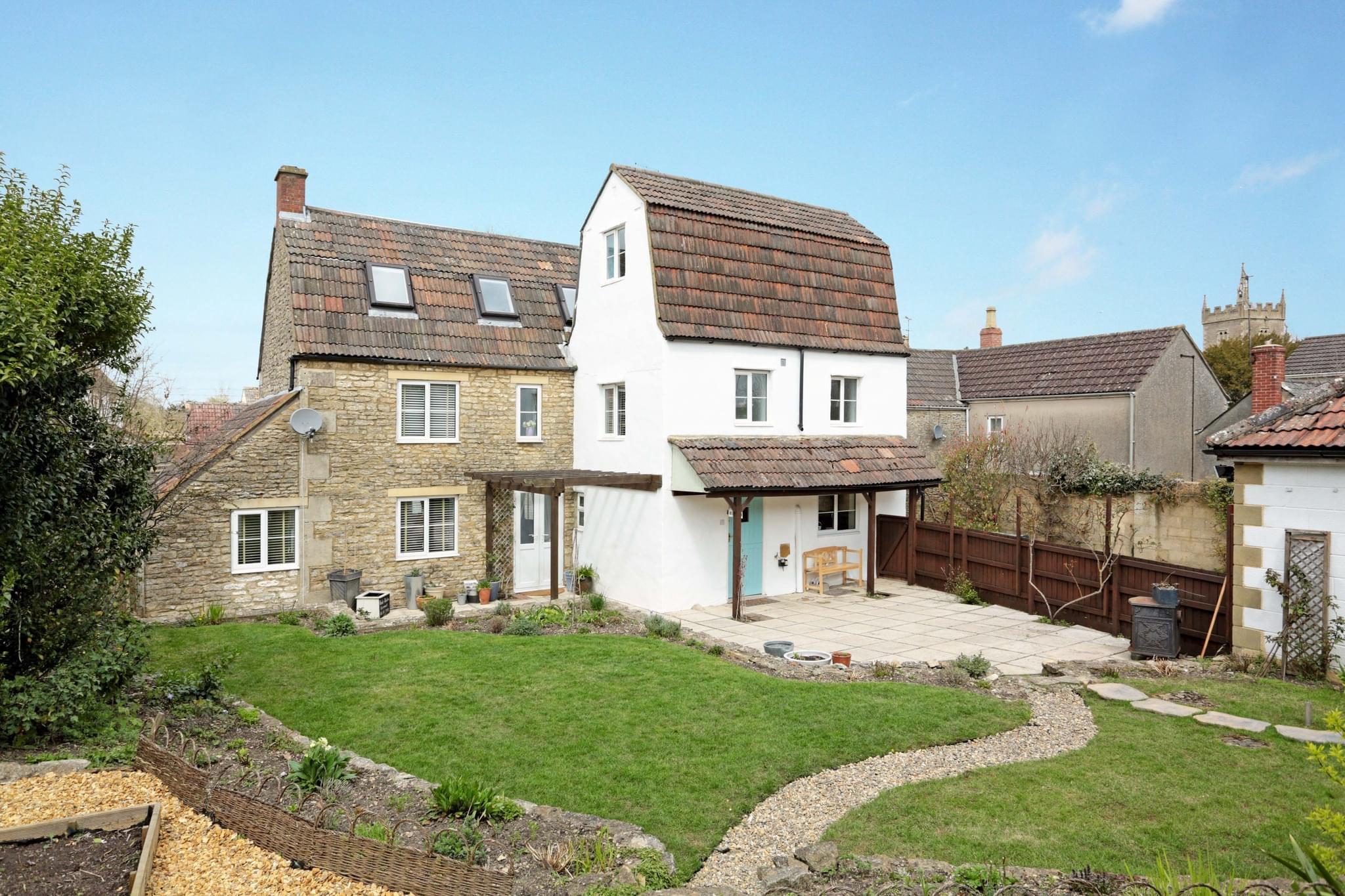
Lime render is a traditional system. There are now a wide range of bagged lime renders we can hand apply or machine spray. These renders have excellent thermal properties and allow properties to breathe.
Sand and cement render. This is to achieve a surface ready to paint. We would recommend a modern bagged s render to achieve the desired effect as its less prone to shrinking and cracking. We are also experts in 'Dashing' as a rule we only get asked to do this on extensions or matching in to older render.
External Brick Slip Cladding:
Brick slips/panels are a fast fix, lightweight brick-effect façade which is ideal for new build or refurbishment projects.
EWI:
We can offer insulated finishes to the external of any property. This can be to new properties or to older properties to bring them up to date with modern insulation values. The most common finish to EWI is a thin coat silicon finish. This is very durable. Some manufacturers offer a lightweight scratch render finish that can be applied to render carrier board or insulation.
Facades FAQ
Can you render over old rendering or it has to be removed?
It is best to remove old render whenever possible. If the existing render is solid, then it can be rendered over also and last just as long. Each property and project is different though so this is specific to each job.
What is rendering in construction?
Rendering is the process of applying a coat of plaster, cement, or other materials to external or internal walls to protect them and improve the building's appearance. It's primarily used on the exterior to provide weather resistance and insulation.
What are the different types of rendering?
There are several types of rendering, including sand and cement render, lime render, silicone render, acrylic render, and monocouche render. Each type has specific properties, making them suitable for different applications.
What causes render to fail?
Render can fail due to poor surface preparation, incorrect mix ratios, insufficient curing, or extreme weather conditions such as heavy rain or freezing temperatures during application.
Can rendering be applied in cold weather?
Rendering in cold weather (below 5°C) is not recommended as it can prevent the materials from curing correctly. Freezing temperatures can also cause water in the render to freeze, leading to cracks and poor adhesion.
What is the best time of year to render?
Render can fail due to poor surface preparation, incorrect mix ratios, insufficient curing, or extreme weather conditions such as heavy rain or freezing temperatures during application.
How can I tell if my render has been applied correctly?
Properly applied render should have a uniform, smooth finish with no visible cracks or bubbles. It should also be firmly adhered to the wall, without flaking or peeling.
What should I do if my render is falling off?
Render that is peeling or falling off indicates poor adhesion. The affected area will need to be removed, and the surface should be prepared again, possibly with the use of a bonding agent before reapplying render.
What are the signs of poor rendering work?
Signs of poor rendering include uneven surfaces, visible cracks, areas where the render is separating from the wall, and discolouration shortly after application. Water ingress may also indicate improper rendering.
How do I know which type of render is best for my property?
The best render for your property depends on factors such as the age and type of the building, the local climate, and the aesthetic you are trying to achieve. For example, silicone render is ideal for modern properties, while lime render is best for older, traditional buildings.
What should I do before rendering a wall?
Before rendering, ensure the wall is clean, free from dust and debris, and any cracks or damage are repaired. Applying a primer or bonding agent can improve the adhesion of the render.
How many coats of render should I apply?
Most rendering systems require at least two coats: a scratch coat and a finishing coat. In some cases, additional coats may be necessary, especially for thicker applications or for added protection in exposed areas.
What happens if render is applied too thickly?
If render is applied too thickly, it can sag and crack as it dries. Thick applications may also take longer to dry, leading to uneven curing and potential failure of the render.
Why is my render bubbling?
Bubbling in render is often caused by trapped air or moisture. It can also occur if the render is applied over a damp surface or if it dries too quickly in hot weather.
Can I render over paint?
Rendering over paint is generally not recommended as it can prevent the render from adhering properly to the wall. The paint should be removed or a bonding agent should be applied to ensure good adhesion.
What causes render to crack?
Cracking can be caused by building movement, improper curing, applying render in extreme weather conditions, or using the wrong mix of materials.
How long should render last?
Render can last 20 to 30 years, depending on the type used and environmental conditions. Silicone and acrylic renders tend to have longer lifespans due to their flexibility and weather resistance.
Can I render over brickwork?
Yes, render can be applied to brickwork, but the surface must be properly prepared, clean, and free of dust. Brick walls should also be primed or sealed before rendering to ensure proper adhesion.
What is the difference between plaster and render?
Plaster is typically used for interior walls, while render is used on external surfaces. Render is generally stronger and more weather-resistant than plaster due to its thicker composition and the materials used.
How do I remove old render?
Old render can be removed using tools like a hammer and chisel or power tools like a masonry grinder. Care must be taken not to damage the underlying surface. In some cases, professional help may be required.
What is the cost of rendering a house?
The cost of rendering depends on factors such as the size of the house, the type of render used, and labour costs. We will visit and provide an estimate of works upon request.
Is rendering a good investment?
Yes, rendering can protect your property from weather damage, improve energy efficiency, and enhance curb appeal, potentially increasing the property’s value.
Can render be applied to a timber frame building?
Yes, silicone and lime renders are often used on timber frame buildings because of their flexibility and breathability, which can accommodate the movement of the structure.
How do I maintain rendered walls?
Rendered walls should be cleaned annually to remove dirt and algae. Small cracks should be repaired promptly, and any areas of damaged render should be addressed before they worsen.
What’s the difference between monocouche render and silicone render?
Monocouche render is a single-layer, cement-based render that is applied in one coat, while silicone render is a flexible, breathable material applied in a two-coat system.
Can rendering improve a building’s insulation?
Yes, modern renders, particularly external wall insulation (EWI) systems, can significantly improve a building’s thermal performance by reducing heat loss.
Why is my render discolouring?
Discolouration can be caused by exposure to pollution, moisture, and UV rays. Using high-quality, UV-stable renders can help prevent this problem.
Is there a render that doesn’t need painting?
Silicone and acrylic renders are coloured through the material, meaning they don’t need painting. This provides a long-lasting finish without the need for regular maintenance.
Can rendering fix a damp problem?
Rendering can help protect against damp by providing a waterproof barrier. However, if the damp is caused by underlying structural or plumbing issues, these must be addressed first.
How do I prevent my render from drying too quickly?
To prevent rapid drying, apply render during cooler times of the day and avoid direct sunlight. In hot weather, dampen the wall slightly before applying the render.
What should I do if my render freezes during application?
If the render freezes during application, it will not cure properly and may need to be removed and reapplied. Always avoid rendering in freezing temperatures.
Can I render over insulation boards?
Yes, rendering over insulation boards is common in external wall insulation systems. A base coat and mesh are applied over the boards before the final render coat.
How do I prepare my wall for rendering?
To prepare your wall for rendering, clean the surface, remove any loose material, and repair any cracks or damage. Applying a bonding agent or primer can improve adhesion.
What is breathable render?
Breathable render allows moisture to escape from the building’s walls while preventing water from penetrating from the outside. Lime and silicone renders are examples of breathable systems.
Can render be applied to painted brick?
Rendering over painted brick is possible, but the paint should be removed, or a strong bonding agent should be used to ensure proper adhesion.
What are the benefits of silicone render?
Silicone render is highly flexible, resistant to cracking, breathable, and available in a variety of colours, providing a durable and low-maintenance finish.
How thick should my render be?
The thickness of render depends on the type being applied. For traditional sand and cement render, a thickness of 10-15mm is recommended. For silicone or acrylic renders, a thinner application is often sufficient.
What is lime render used for?
Lime render is commonly used on older or historic buildings because it is breathable and can accommodate the movement of older structures without cracking.
Can I DIY render my home?
While it’s possible to render your home as a DIY project, it requires skill and experience to achieve a good finish. For larger or more complex jobs, it’s recommended to hire a professional.
What is the drying time for silicone render?
Silicone render usually dries within a few hours to a day depending on weather conditions, but full curing may take several days.
What are the common mistakes made when rendering?
Common mistakes include applying render too thickly, using the wrong materials, failing to prepare the surface correctly, and rendering in poor weather conditions.
Is silicone render worth the extra cost?
Silicone render is more expensive than traditional sand and cement render, but its flexibility, weather resistance, and low maintenance make it worth the investment for many homeowners.
Can I render in the rain?
Rendering in the rain is not recommended as the water can prevent proper adhesion and curing, leading to cracking and failure of the render.
How do I repair cracked render?
Small cracks can be repaired using exterior filler, while larger cracks may require a patch of the same render material. It’s important to repair cracks promptly to prevent further damage.
Can I render over pebbledash?
Rendering over pebbledash is possible, but it’s important to assess the condition of the pebbledash first. A bonding coat may be necessary for proper adhesion.
What is a scratch coat?
A scratch coat is the first layer of render applied to the wall. It is scratched or scored to provide a key for the second, finishing coat to adhere to.
How do I remove algae from rendered walls?
Algae can be removed using a mild detergent, soft brush, or pressure washer on a low setting. Regular cleaning helps prevent algae build-up.
What is acrylic render?
Acrylic render is a flexible, decorative render that contains plastic polymers. It provides a durable, water-resistant finish and is often used as a topcoat over base renders.
How can I prevent cracks in newly applied render?
To avoid cracking, ensure that the surface is properly prepared, use flexible materials like silicone render, and apply mesh reinforcement at weak points such as joints and corners. Rendering should also be done in optimal weather conditions, avoiding freezing or very hot temperatures.
Should I be worried about hairline cracks in render?
Hairline cracks are often cosmetic, but they can allow water to penetrate over time, leading to larger cracks or damage beneath the surface. It’s best to repair them as soon as possible to prevent further issues.
What are shrinkage cracks in render?
Shrinkage cracks occur when render dries too quickly, causing it to shrink and crack. This often happens when render is applied in hot weather or when the mix contains too much water.
How do I repair cracks in render?
Small cracks can be repaired using exterior filler or patching material. For larger cracks, you may need to remove the affected area of render, reapply a base coat, and then finish with the same render mix to match the existing surface.
What are movement cracks?
Movement cracks occur when the underlying structure of the building shifts or settles, causing the render to crack. Flexible renders like silicone or lime can help accommodate movement and reduce the likelihood of these cracks.
Can I use filler to repair render cracks?
For small cracks, exterior-grade filler can be used. However, for larger or more significant cracks, it’s better to use a patch of the original render material to ensure a more durable repair.
Why is my render cracking after a few weeks?
Render that cracks shortly after application is often a result of poor surface preparation, incorrect application, or drying too quickly in hot weather. Using the wrong render mix or applying it too thickly can also lead to early cracking.
Can weather cause my render to crack?
Yes, extreme weather conditions such as heavy rain, freezing temperatures, or hot sun can cause render to crack, especially if it hasn’t been applied or cured properly.
Why is my render absorbing water?
Render may absorb water if it hasn’t been properly sealed or if it is made of a material that isn't water-resistant. Traditional sand and cement renders are more porous than modern silicone or acrylic renders, which are designed to repel water. Poor installation or cracks in the render can also allow water to seep through.
How do I stop water from seeping through render?
To stop water from seeping through, ensure the render is properly applied without cracks or gaps. Silicone-based renders are particularly effective at repelling water. If your existing render is absorbing water, consider applying a waterproof sealant or re-rendering with a more water-resistant product.
Can poor rendering cause damp in my home?
Yes, if the render is cracked or improperly applied, it can allow water to seep into the walls, leading to damp problems inside the property. Damp can cause mould growth and damage to interior walls, making it essential to maintain the render properly.
Why is there dampness under my render?
Dampness under render can be caused by water penetration through cracks or gaps in the render, poor ventilation, or rising damp from the ground. It’s important to identify the source of moisture and repair the render or improve drainage to prevent further damage.
What is the best render to prevent dampness?
Silicone and acrylic renders are ideal for preventing dampness as they are water-resistant and allow moisture from inside the building to escape. Lime render is also good for older buildings as it is breathable and can accommodate natural movement.
How can I prevent damp patches from forming on my rendered walls?
Damp patches can be prevented by using a breathable, water-resistant render like silicone or lime, and ensuring that the surface is properly sealed. Regular cleaning and maintenance of gutters and downpipes can also prevent water from running down the walls.
What should I do if my render is trapping moisture?
If your render is trapping moisture, it may be due to poor breathability or a lack of ventilation. In some cases, reapplying a breathable render like silicone or lime may be necessary to allow the moisture to escape. You may also need to improve drainage around the base of the building.
Why is my render discolouring due to damp?
Discolouration caused by damp is often due to water being absorbed by the render, leading to stains or patches of mould or algae growth. Waterproof render or sealant can help prevent this by repelling moisture and preventing water from penetrating the render.
Can dampness in render cause structural damage?
Yes, if dampness penetrates deep into the walls and is left untreated, it can weaken the structure of the building. Prolonged exposure to water can cause timber to rot, metal components to rust, and masonry to weaken.
What’s the difference between rising damp and penetrating damp?
Rising damp occurs when moisture from the ground moves up through walls due to capillary action. Penetrating damp occurs when water enters the building through defects in the exterior, such as cracks in the render or damaged roofing.
How do I fix penetrating damp caused by poor rendering?
To fix penetrating damp, you’ll need to repair the defective areas of render by filling cracks and reapplying a waterproof finish. In some cases, the entire area may need to be re-rendered if the existing render has failed.
Why is my render bubbling after rain?
Bubbling in render after rain indicates that moisture is trapped beneath the surface. This can happen if the render was applied to a damp surface or if there are cracks allowing water to enter. The affected area may need to be repaired or re-rendered.
Can poor ventilation affect render?
Yes, poor ventilation can cause moisture to build up inside the walls, leading to dampness and potential damage to the render. Proper ventilation is essential for maintaining the longevity of the render and preventing issues like mould or damp patches.
What’s the best render for rainy climates?
Silicone render is ideal for rainy climates as it is highly water-resistant, flexible, and breathable. It prevents water penetration while allowing moisture from inside the building to escape, reducing the risk of dampness.
Why is my render turning green?
Green discolouration is usually caused by the growth of algae, which thrives in damp, shaded areas. This is more common in regions with high humidity or regular rainfall. Regular cleaning and using a render with anti-algae properties can help prevent this.
How can I remove algae from my rendered walls?
Algae can be removed by gently scrubbing the surface with a soft brush and a mild detergent or by using an algae remover. Pressure washing on a low setting can also help, but care must be taken not to damage the render.
Why is my render turning black?
Black stains on render are often caused by the growth of mould or sooty pollution deposits. This is common in areas with poor air quality or where the render is exposed to high levels of moisture.
How do I clean discoloured render?
Discoloured render can be cleaned using a soft brush and mild detergent. For more stubborn stains, a specialist render cleaner or low-pressure washing can be used. Avoid harsh chemicals or abrasive scrubbing, which could damage the render.
What is causing white stains on my render?
White stains, known as efflorescence, are caused by salts migrating to the surface of the render. This is common in cement-based renders and occurs when water penetrates the render, bringing salts to the surface as it evaporates.
How can I prevent algae from growing on my render?
To prevent algae growth, ensure that the render is applied correctly and that the wall is kept clean and dry. Consider using an anti-fungal or algae-resistant render, and regularly clean shaded or damp areas where algae are more likely to grow.
Can render be stained by pollution?
Yes, pollution can cause staining on render, particularly in urban areas with high levels of vehicle emissions or industrial pollution. Silicone or acrylic renders with dirt-resistant properties can help reduce the likelihood of pollution staining.
Can render be stained by pollution?
Yes, pollution can cause staining on render, particularly in urban areas with high levels of vehicle emissions or industrial pollution. Silicone or acrylic renders with dirt-resistant properties can help reduce the likelihood of pollution staining.
Why is my render fading in colour?
Fading can occur when render is exposed to UV rays over time. This is more common with cement-based renders that require painting. Silicone and acrylic renders are more UV-resistant and tend to retain their colour for longer.
Can I repaint faded render?
Yes, faded render can be repainted. It’s important to clean the surface thoroughly and use a suitable exterior-grade paint that is compatible with the render type.
What causes yellow stains on render?
Yellow stains on render are often caused by contaminants such as pollen, lichen, or chemicals from nearby plants or materials. These can usually be cleaned off with water and a mild detergent.
How do I mix render properly?
For traditional sand and cement render, the standard mix is typically 4 parts sand to 1 part cement. Always add water slowly and mix until you achieve a smooth, workable consistency.
How long should I wait between render coats?
Allow the first coat (scratch coat) to dry for at least 24-48 hours before applying the second coat. Drying times may vary based on the weather and the thickness of the coats.
Can I apply render in layers?
Yes, render is typically applied in layers to ensure proper bonding and curing. Applying too much in one go can lead to problems with cracking and poor adhesion.
What type of render is best for brick walls?
Sand and cement render is commonly used on brick walls, but silicone or acrylic render can be better for longevity and flexibility, especially if the brickwork is prone to movement
General Pre & Post Works Information
How do I get a quote for works?
If you drop us an email to enquiries@kandr-group.com or call 01249 914109 we will get out to look at the proposed works and provide an estimate as soon as possible.
K&R Group clients, products & associates




Proud members of: