"We used K&R on a new build development in Chedworth and were really pleased with the results.
They finished both properties to a really hi... Read more



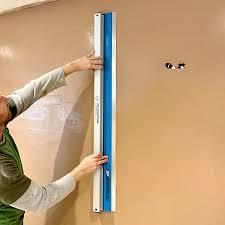
Plastering was the initial service offering from Knight & Riddell Plastering Ltd and where Martin and Simon learned their trade.
We are able to offer both Modern and Traditional methods of plastering which can be applied by hand or spray.
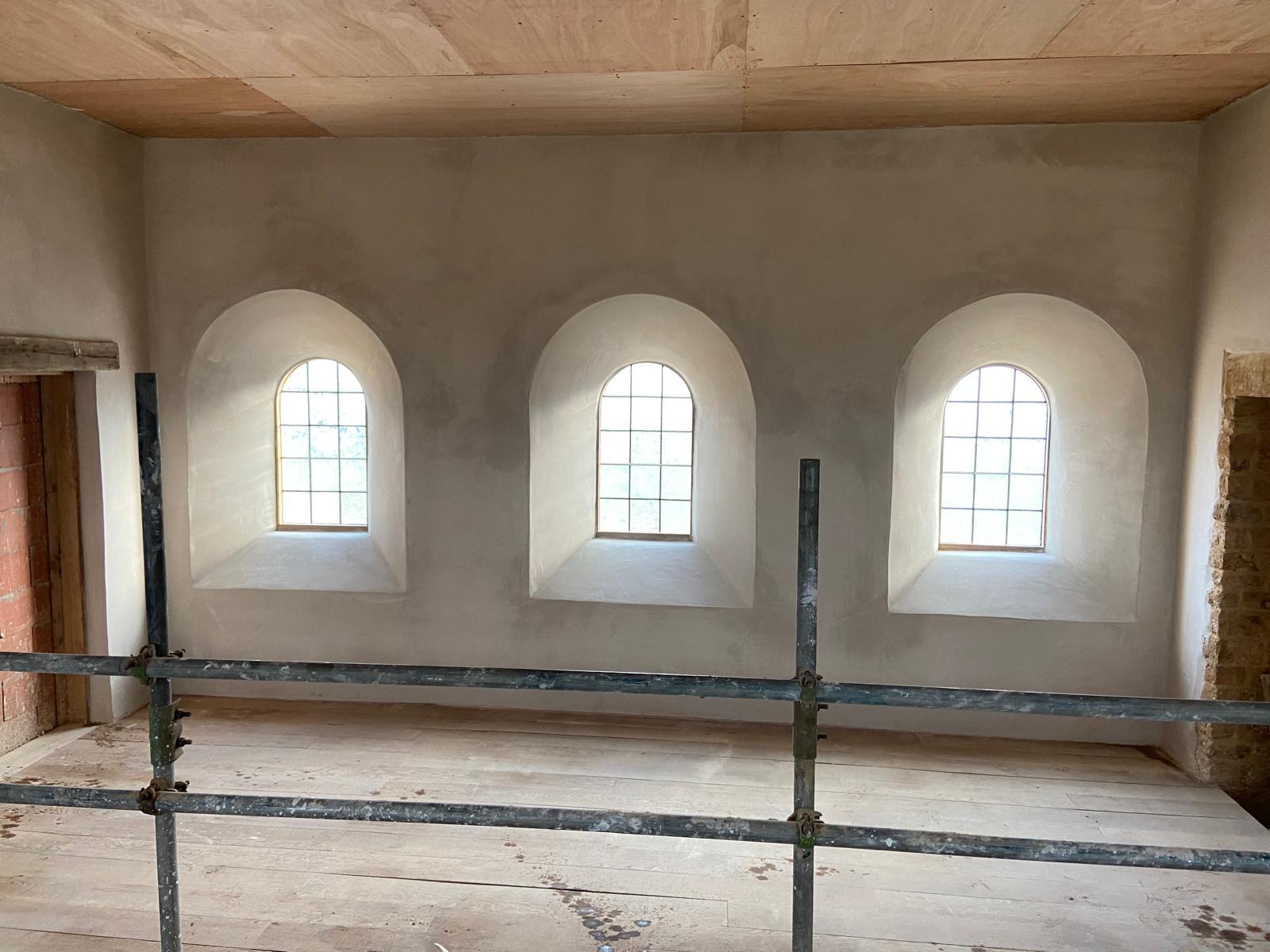
We are able offer traditional techniques, with a wealth of experience in applying these methods:
Hardwall and Skim (a 2 coat system)
1. Hardwall Backing Plaster
2. Skimmed Layer
A harder wearing finish, that is designed to take heavy traffic and general knocks and provides good insulating properties.
Lime plaster (a 3-4 coat system)
1. Harl Coat
2. Haired Scratch Coat
3. Un-Haired Float Coat
4. Lime Putty Finish.
Which is designed for older properties or properties with damp issues.
Lathe and Plaster (a 5 coat system)
Similar to the Lime system, where strips of timber are used as an alternative to plasterboard followed by a Lime finish. This is more commonly used in historical buildings.
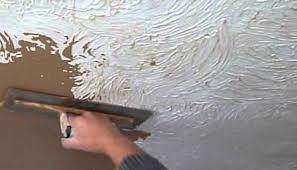
We offer all modern Plastering systems which include:
The cost of plastering really depends on exactly what needs to be done, the size of the room and any added complexity, such as access.
For example a simple plastering repair for just one wall or area of a room is likely to cost considerably less than plastering a whole room. If a room needs to be plasterboarded before skimming this is going to cost far more than purely skimming a wall because there are more materials required and it will also take longer to complete.
It is possible to give an estimate by phone if you are able to provide the room dimensions, however to provide a quotation to complete the plastering work we will need to come and take a look at what’s required, check the condition of the area to be plastered and take our own measurements.
When your plastering is first completed it will be rich brown in colour because the plaster will be fresh and full of moisture. As the plaster dries out it will become patchy, a mixture of brown and pink. Once dry, the plaster will be pale pink in colour and all of the brown patches will have disappeared. Certain areas of the plastering may take longer than others to dry out, for example, corners, areas where the plaster may have been applied more thickly, and areas that have had to have additional filling. Your plastering is completely dry once all brown patches have dried out and the surface is a consistent pale pink colour.
We complete plastering work in throughout the South and South West of England. We have completed plastering jobs and projects of all types across all areas of Devon, Gloucestershire, Oxfordshire, Somerset and Wiltshire.
Generally, it will take around 3-5 days for plastering to dry out however there are a few factors that will affect the drying time of your plaster.
The thickness of the plastering will affect the time it takes for the plaster to dry out
If there are any areas that require additional work, for example, if there is a void, a large crack, or a gap which requires filling then a base coat or bonding plaster may be required before skimming. This means that certain areas may be thicker than others and therefore require more time for the plaster to thoroughly dry out. If there has been significant filling it could take as long as two weeks for the plaster to be thoroughly dry and ready for painting and decorating.
Another factor that will affect the drying time for your plastering work is the room temperature and ventilation. It can be tempting to turn the heating right up to speed up the drying process but this is not recommended. Excessive heat will cause the plaster to dry too quickly which may result in cracking or hazing. The best condition for allowing your newly plastered walls/ceiling to dry is to provide some ventilation by opening a couple of windows slightly. You can put the heating on, however, we recommend you keep this at a low temperature for a number of days after the plastering is completed. This will help with the drying process whilst avoiding the plaster cracking.
Please do not turn the heating on full blast to try and accelerate the drying process of your plastering. It is also not a good idea to bring in additional heaters or dehumidifiers in an attempt to dry the plaster out quickly. Unfortunately it’s just a matter of being patient and allowing the plaster to dry out at its own speed. Open a couple of windows slightly to provide light ventilation. You can also put heating on but only at a low temperature. If you try and rush the process with excessive heat you’ll ruin the results and the finish of your newly plastered surface. When plaster dries out too rapidly it causes cracks or haze cracking.
Please ensure your plaster is thoroughly dry before you consider decorating. The plaster will take a minimum of 3-5 days to dry thoroughly and in some cases longer. Once dry, the plaster will be pale pink and all brown patches will be gone.
It is possible to plaster over artexing however there are often some additional preparation steps required. It’s best if we can take a look at the artexing so we can tell you what steps need to be taken and so we can give you an accurate price. We can also assess the artex surface for asbestos and make any recommendations for an asbestos survey. When plastering over artex, depending on the thickness and design of the artex it may be necessary to scrape back the artex to reduce the peaks and then coat the surface with PVA before skimming with plaster. This can be a messy process so in some cases we may choose an alternative and instead fill out the artexed surface by applying a bonding coat to flatten it before skimming it. The route we take will be dependent on the thickness of the artex, the size of the area to be covered, and whether or not there is any coving in place. Our priority will be to assist you in eliminating your artex in the most cost-effective way with the least amount of mess and disruption. Give us a call and we’ll come and take a look and let you know what’s required.
Yes, we complete plastering works of all types from ceilings to walls, plaster repairs, skimming, plasterboarding, overboarding, plastering whole rooms, plasterboarding and skimming house extensions, and new build houses consisting of many rooms and also plastering renovation properties. No job is too big or too small. Please contact us for a quotation for your plastering requirements.
We can help erect partition walls. A partition wall or stud wall is a non load bearing wall which can be installed to divide up a space. When erecting a stud wall we can help with constructing the studs, which is the timber frame that provides the structure, plasterboarding, and them skimming the surface.
Overboarding is applying new plasterboard over the top of the existing plastered surface as opposed to the new plasterboard being screwed directly to the ceiling joists. Essentially it’s like applying a new skin over the top of the old one. In the case of an artexed or lath and plaster ceiling, new plasterboard would be installed over the top of the existing ceiling. When overboarding it is very important to locate and fix into the original ceiling joists.
Sometimes small cracks and hazes may be seen in new plastering as it dries due to the materials shrinking. Sometimes this can be more evident if plaster has been dried out too quickly, maybe if the heating has been put on high. Hairline cracks can occur in places and are fairly normal with temperature changes as everything does expand in higher temperatures.
Skimming means to apply a thin coat of finishing plaster to an existing wall or ceiling or to new plasterboards. Skimming creates a smooth finish to walls and ceilings before painting or applying wallpaper.
There are a number of things you can do in advance of us arriving to plaster your room.
Where possible please remove furniture and accessories such as pictures, mirrors, and ornaments
If a piece of furniture is too large or heavy to be moved we will cover it for protection and work around it
We will cover carpets and flooring with our own dust sheets when we arrive and before any work commences
We will need access to water to carry out our work so we may need to access other rooms to fetch water and we will discuss this with you when we arrive
We will bring additional dust sheets to cover flooring in any rooms we need to access to obtain water
If there are any existing wall coverings in place such as wallpaper or flaky paint these can be removed. We are happy to complete this work for you, however, if you can do this work yourselves prior to our arrival this will help to keep costs down. If you would like us to complete any such preparation work please make us aware of this when we are discussing your plastering job and providing our quotation
When we are plastering we need to cover light fixtures to protect them. We do this using black plastic sacks and tape. We also need to remove all sockets and light switch plates
In most cases, we will do this type of preparation ourselves on arrival. Once we’ve finished plastering it’s best if these can be left uninstalled for a short period of time to allow for the plaster to dry. If you would like us to return to reinstall them a few days after we have finished work please let us know at the quotation stage
It would be most helpful if you could keep pets and children in another room whilst we are working. This is for safety reasons and to avoid the transfer of plaster and dust into unprotected areas of your property
We will bring dust sheets and plastic with us to protect your flooring, woodwork and to cover any furniture which cannot be moved to another room.
The time is takes to plaster a room depends on what’s required, and on the size of the room. We can give you an estimated completion time when we come and look at the job and provide a quote.
We are able to refer you to local trades for painting and decorating services.
Skimming over lath and plaster is not recommended and could cause the original plaster to pull away from the laths which would be very messy indeed! If you have lath and plaster there are really two options, to remove the lath and plaster completely and start again, generally with plasterboard, or alternatively we can simply plasterboard over the top of the existing lath and plaster and skim to finish. Removing lath and plaster can be messy so in most cases, people opt to plasterboard over it.
Depending on the work carried out, it would usually take around one week for the plaster to dry. During the work, the skim finish will be light pink, within three to four hours this turn a deep brown colour as the plaster cures. As it begins to dry, it returns to a very light pink colour, as this happens it will be obvious it is beginning to dry. You should wait for the entire area to be light pink before decoration.
Cracking in a ceiling are usually caused by movement in the timber joists above, you can use a lightweight filler such as Easy fill to try and minimise future cracking.
No, this is common practice for people hanging wallpaper to seal the newly skimmed walls, this helped paper to stick and allow decorators time to position the paper but it actually makes the walls harder to paint as emulsion does not stick well to PVA and cannot soak into the plaster.
All surfaces need to be stripped before re-skimming can take place.
Some traditional two coat plaster can be 60 or seventy years old, cracking is normal, you might want to have the walls skimmed for a paintable finish but if you are hanging new paper generally you will be fine to carry on.
Usually, damaged plaster can be removed and repaired to blend in with the remaining existing plastered surfaces.
This would depend on the insurance company you are covered by. Some will supply their own contractors; some may ask you to get three quotes for comparison. We offer free written quotes that you can forward on to your insurer.
We would need access to clean mixing water from a tap and power for our mixing equipment. We do have a portable generator, but these are impractical to use in a domestic plastering setting.
Plaster is supplied as a dry powder in 25kg bags, these need to be mixed with clean water on-site so there is unfortunately always going to be some dust that we cannot contain. All rooms are cleaned as we finish our work but over the next day or so, some dust will settle again. Nothing that a damp cloth or a bit of Mr sheen won’t take care of though so there’s no need to be concerned.
We will always sweep and leave the area tidy upon completion of the work. We can arrange for waste disposal if required, this will be included in your Estimate. Alternatively you can arrange disposal of any debris.
Your bathroom fitter will usually call us in shortly after they have removed the old suite and tiles. We will then prepare the walls ready for painting or tiling when the new suite has been fitted.
We cover Devon, Gloucestershire, Oxfordshire, Somerset and Wiltshire.
We are able to offer damp proofing. Please speak to us to request an Estimate.
We work alongside builders and trades on a daily basis and are always happy to quote on a new development. We can work out a cost from approved plans also if you are trying to schedule the works well in advance.
Typically we would work in the week, access to your property in the form of a key is fine for us as we prefer the rooms to be empty while we work anyway but if it’s essential to have your plastering done at a weekend we can certainly arrange this.
Our preferred method of payment is bank transfer.
We will remove sockets and light switches before plastering to ensure the best finish. Radiators would ideally be removed prior to us arriving for that reason also.
No, an undercoat plaster is very coarse and designed to fill out a deeper area. Uneven walls would usually be better off with a reskim.
If you are wanting to wallpaper straight onto newly plasterered walls then unlike the painting question above you will need to apply a coat of PVA first otherwise the plaster will just suck all the moisture out of your wallpaper paste and you won’t be able to move the wallpaper around into position.
Yes we undertake all jobs small and large but you must bear in mind that to plaster a 3ft square area of wall will still require a plasterer to be on site for up to 3 hours as plaster has to be given time to set slightly before it can be trowelled up smooth. Small jobs can therefore seem quite expensive in comparison but it’s due to the time we have to wait for it to set. If you have a patching job it’s usually much more economical to get it done at the same time as something else so as to utilise the plasterers time well.
Yes a good artexer should be able to patch the artex up for you once the ceiling is repaired but depending upon the artex pattern it may be difficult to get an exact match to the existing pattern. Most of our customers choose to have the ceiling re-skimmed in such cases.
Trying to find original cornice to match up can be an extremely difficult, expensive and a time consuming task. Sometimes you may get lucky and find some in a reclamation yard but it is rare to find any that matches your exact style that is in good condition and intact. Our coving and cornice restoration service is just what you need. We can supply any custom made to match decorative plaster moulding from cove to ceiling roses and as the new piece is an exact replica of the original once fixed you will never know it has ever been replaced thereby keeping the original property features and not having to compromise on a quality finish.
We would prefer to look and carry out our own survey of any ceilings like this on an individual basis but generally yes it is possible to plasterboard over it and in some cases this is a better option and will certainly be cheaper and create less mess.
If you drop us an email to enquiries@kandr-group.com or call 01249 914109 we will get out to look at the proposed works and provide an estimate as soon as possible.
K&R Group clients, products & associates


"We used K&R on a new build development in Chedworth and were really pleased with the results.
They finished both properties to a really hi... Read more
Proud members of:






FAQs, documents & more can be found in our Customer Center or speak to one of our helpful team